Inside the Build: Engineering Two 132/33kV Substations for Nigeria's Capital — Kuje/Wumba/Lokogoma Technical Perspective
Focus: Technical Perspective | Kuje/Wumba/Lokogoma 132/33kV Substations, FCT | 5x60MVA =300MVA | 11x 132kV AIS Bays | 5km XLPE Underground | Certified 24 June 2022
From 60MVA transformers to 5 km of underground high-voltage cable, the Kuje / Wumba / Lokogoma project was a complete engineering, procurement and construction undertaking. Here is what it involved.
A transmission substation is where the grid changes gear. Power arriving at high voltage is stepped down, switched, protected and sent out to distribution networks. Designing and building one from scratch involves civil engineering, heavy electrical equipment, sophisticated protection systems and digital control, all integrated into a single functioning system.
The Kuje / Wumba / Lokogoma Substations Project, awarded by Transmission Company of Nigeria to International Consolidated Contractors in May 2020, delivered two such substations and an underground cable connection. TCN's certificate confirms full scope was completed on 24 June 2022.
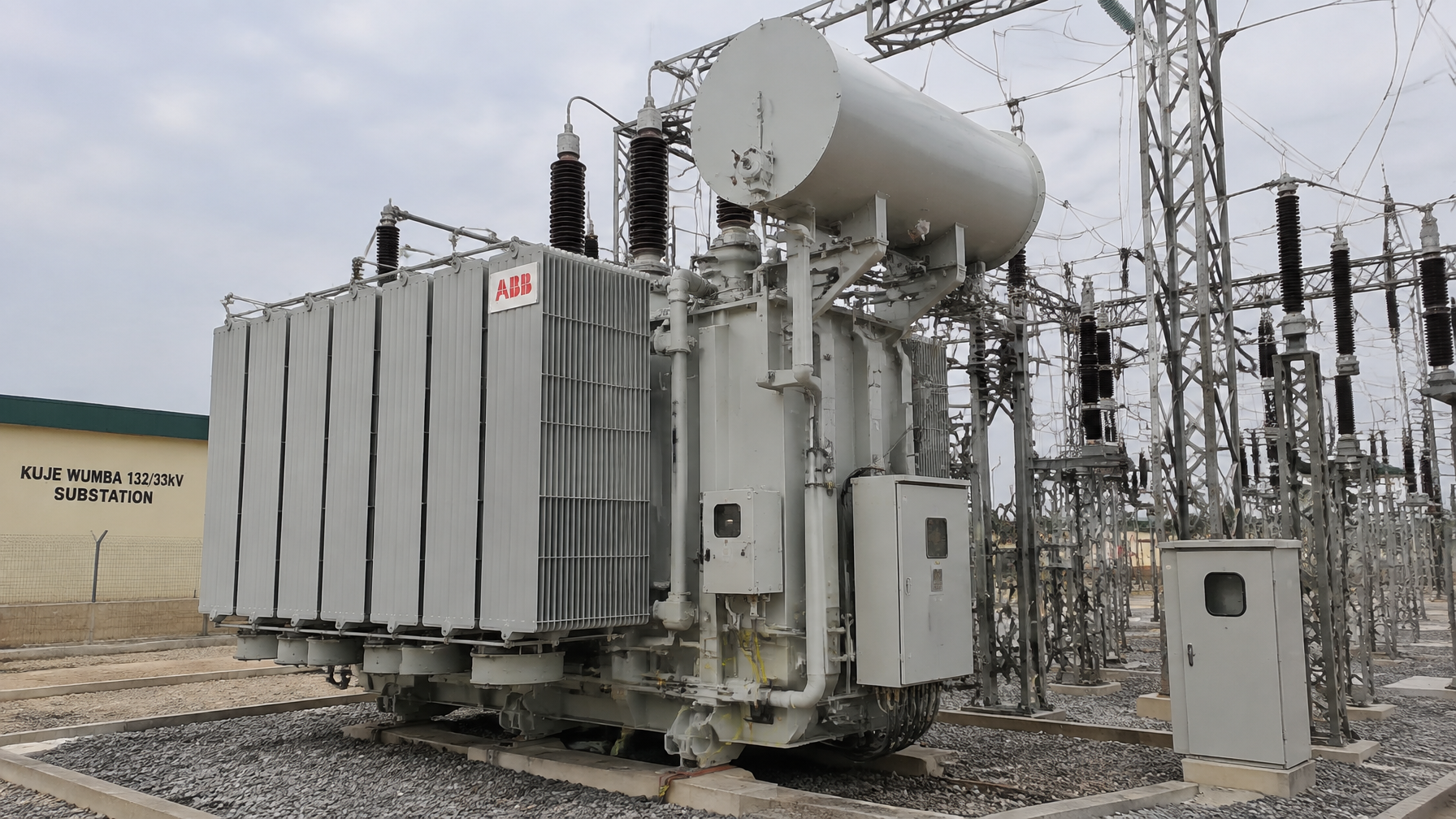
The Transformers: 3x60MVA at Kuje + 2x60MVA at Wumba = 300MVA
At the heart are power transformers. Kuje received three 60MVA, 132/33kV transformers, while Wumba/Lokogoma received two of same rating, for combined 300MVA. Each was installed with on-load tap changers (OLTC), which adjust voltage ratio while in service, allowing operators to keep 33kV supply stable as load and grid conditions change. Cooling radiators, protection panels and auxiliaries completed installations. Multiple transformers at each site also give flexibility to carry load when a unit is taken out for maintenance.
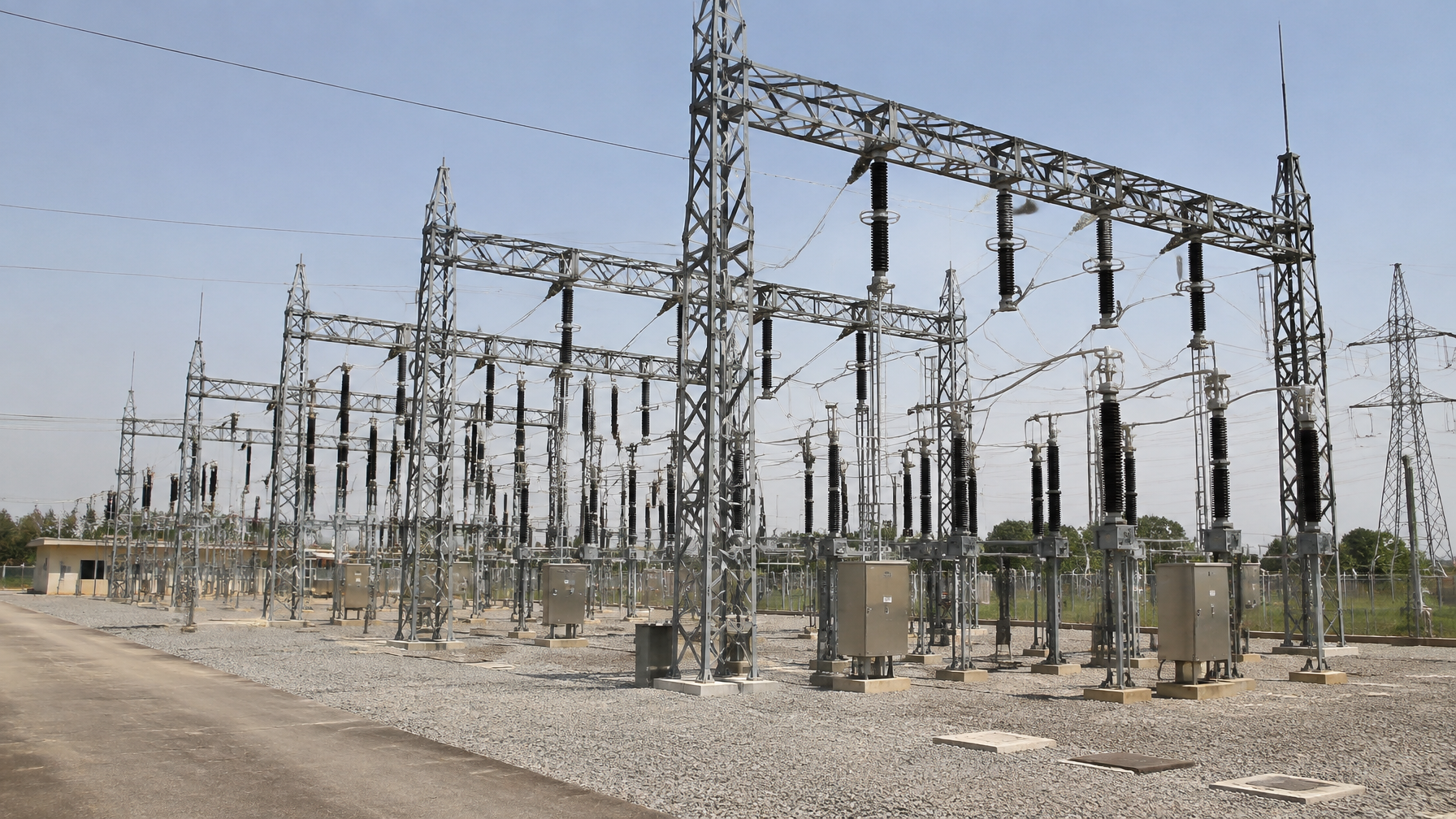
High-Voltage Switchgear: 11x 132kV AIS Bays
All 132kV bays use air-insulated outdoor switchgear (AIS), mounted on steel structures and gantries. Kuje has seven bays: four line bays for incoming/outgoing 132kV circuits, and three transformer bays. Wumba/Lokogoma has four: two line bays and two transformer bays. In total, eleven outdoor 132kV AIS bays. The four line bays at Kuje, in particular, give multiple connection points to wider grid, improving resilience and leaving room for future expansion.
Medium-Voltage Switchgear: 22x 33kV Panels
On the 33kV side, substations use indoor metal-clad switchgear housed within control buildings: twelve panels at Kuje and ten at Wumba/Lokogoma, twenty-two in total. These include transformer incomers, outgoing distribution feeders, bus sections and protection, forming interface between transmission and distribution.
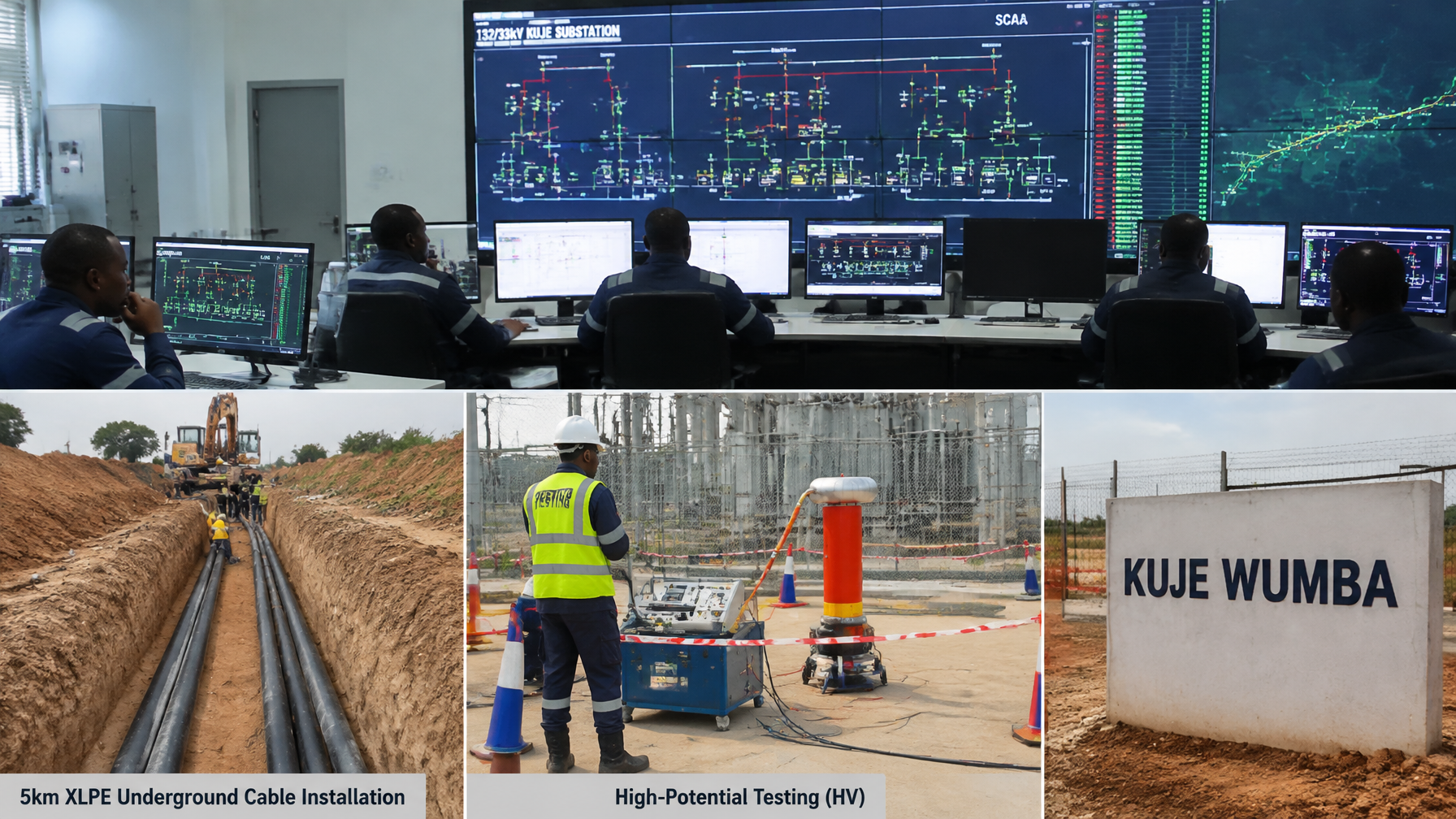
Protection, Control and SCADA & The Underground Cable: 5km XLPE
Modern substations depend on fast, reliable protection. The project installed transformer and line protection relays, control panels, metering and interlocking systems at both sites. DC systems with chargers and battery banks keep protection and control functional even if AC supply is lost. Substations are integrated into TCN's control centre through SCADA, supported by communication and fibre-optic systems.
Perhaps most technically demanding was approximately 5 km 132kV XLPE underground cable between New Apo Substation and Wumba/Lokogoma. XLPE (cross-linked polyethylene) offers high dielectric strength and low maintenance. Work included trenching, ducting, joints, link boxes and terminations. Link boxes are part of sheath bonding system. Before energization, the cable underwent hi-pot and sheath testing.
Civil Works, Buildings & Verified Performance
Each site received fully constructed control building containing control room, relay/protection rooms, SCADA/telecommunication rooms, battery/charger rooms, LVAC/DC rooms, and server rooms, plus external works (transformer foundations with oil containment pits, switchgear foundations, cable trenches, fencing, roads, drainage, lighting).
A final inspection on 28 June 2022 confirmed all civil, electrical, mechanical and control works met required technical, safety and operational standards. For engineers, project is clear example of what complete, single-point EPC delivery looks like: every layer, from foundations to fibre optics, designed, built and tested as one integrated system.
Kuje/Wumba Technical At-A-Glance
| Item | Details |
|---|---|
| Transformers | Kuje 3x60MVA + Wumba 2x60MVA = 300MVA total, 132/33kV with OLTC |
| 132kV Bays | 11x AIS outdoor (Kuje 7: 4 line +3 transformer; Wumba 4: 2 line +2 transformer) |
| 33kV Panels | 22x indoor metal-clad (Kuje 12, Wumba 10) |
| Cable | ~5km 132kV XLPE underground New Apo → Wumba/Lokogoma, hi-pot/sheath tested |
| Control | SCADA + fibre-optic integrated to TCN control centre, DC battery banks |
Frequently Asked Questions
Q: What is 132/33kV?
Transformation from high-voltage transmission (132kV) to medium-voltage distribution (33kV) for homes/businesses.
Q: Why OLTC?
On-load tap changer keeps 33kV stable while transformer stays in service as load/grid changes.
Q: Why underground cable at Wumba?
Avoids towers and wide corridors in dense urban area — but requires trenching, ducting, joints and hi-pot testing.
Based on TCN certificate of completion 24 June 2022 for Kuje/Wumba/Lokogoma. Consult tcn.org.ng.
Comments
Post a Comment